Related topic: This article is part of The NAD+ Pathway and Energy. If you want the broader overview, start with NAD Precursors Guide: NR, NMN, Niacin, IV Therapy, And Dosing. Nicotinamide mononucleotide has become one of the most discussed anti aging supplements in recent years. But with doses ranging from 100mg to over 1000mg across various products and protocols, determining the optimal nmn dosage can feel overwhelming.
This guide synthesizes evidence from human clinical trials conducted between 2020 and 2024 to help you understand what the research actually shows. You’ll find practical dosing guidance based on participant outcomes, safety data, and population-specific recommendations.
Define NMN and Mechanism
Nicotinamide mononucleotide nmn is a naturally occurring molecule and direct precursor to nicotinamide adenine dinucleotide (NAD+). This coenzyme plays critical roles in energy production, dna repair, and sirtuin activation—proteins linked to longevity pathways.
When you take nmn supplements orally, they’re rapidly absorbed and converted to NAD+ via the salvage pathway. This process bypasses rate-limiting steps in the body’s own NAD+ production, leading to measurable increases in blood nad levels.
The relevance to anti aging stems from a simple observation: NAD+ declines with age. This age related decline impairs mitochondrial function and reduces sirtuin activity. NAD+ depletion has also been implicated in the development or progression of neurodegenerative disorders such as Alzheimer’s disease. Animal studies demonstrate that restoring NAD+ through NMN reverses vascular dysfunction, enhances endurance, and improves cognition—effects that human and animal studies suggest may partially translate to people.

Human Studies Summary
Key human trials examining nmn supplementation include:
| Study | Dose | Duration | Participants | Primary Outcome |
|---|---|---|---|---|
| 2022 Multicenter RCT | 300/600/900mg | 60 days | 80 middle aged adults (40-65) | NAD+ elevation, 6-min walk |
| 12-Week RCT | 250 mg daily | 12 weeks | 30 healthy adults | NAD+ from week 4 |
| MIB-626 Trial | 1000-2000mg | Variable | 32 overweight older adults | Dose-dependent NAD+ |
| Open-Label Study | 500mg single dose | Acute | 10 males | NAD metabolite increase |
Most participants across trials were middle aged (35-81 years), with study designs favoring short-term randomized controlled trials. Research suggests consistent tolerability up to 1250 mg daily with no serious adverse effects reported.
Notable gaps persist in long-term studies beyond 12 weeks and trials measuring direct aging biomarkers.
Dose-Dependent Clinical Trial Findings
The pivotal 2022 dose dependent clinical trial compared 300mg, 600mg, and 900mg daily over 60 days. Results revealed clear dose-response relationships:
- NAD+ rose significantly in all NMN groups versus placebo (p≤0.001)
- Peak elevations occurred at 600-900mg
- 6-minute walk distances increased most in higher doses groups (p< 0.01 versus placebo group)
- SF-36 health perception scores improved robustly at 600mg and above
Meta-analyses of trials up to 1250 mg daily show consistent safety but variable efficacy. Lower doses of 100-300mg may be insufficient for effects comparable to what animal studies demonstrate.
Key Double-Blind Human Trials
The 2022 double blind trial (NCT04823260) provides the strongest evidence:
- Design: Placebo controlled, parallel group, randomized
- Participants: 80 healthy middle aged adults aged 40-65
- Duration: 60 days
- Doses: 300mg, 600mg, or 900mg once daily post-breakfast
- Sample size: n=20 per arm with no dropouts
Primary endpoints showed dose-dependent NAD+ elevation. Secondary endpoints included superior 6-minute walk performance across all NMN groups and improved SF-36 scores measuring health perception.
Another double blind trial using 250 mg daily for 12 weeks in 30 middle aged participants confirmed NAD+ elevation with full tolerability.
Recommended mg per Day by Population
Based on current clinical trials, here are population-specific recommendations:
Healthy Middle Aged Adults (40-65)
- Optimal: 600 mg daily
- Range: 300-900 mg per day
- Rationale: Peak NAD+ and physical performance responses without exceeding tested safety thresholds
Middle Aged with Metabolic Issues
- Consider: 600-1000mg daily
- Evidence: Dose-dependent NAD+ rises observed in overweight/obese adults at higher doses
- Note: Those with prediabetes or insulin resistance may benefit from higher-end dosing
Upper Limits
- Maximum tested: 1250 mg daily (no adverse events)
- Prudent cap: 900-1200mg pending long-term data
- Higher totals require clinical oversight
Practical Dose Tiers and Rationale
Consider these tiers when taking nmn supplements:
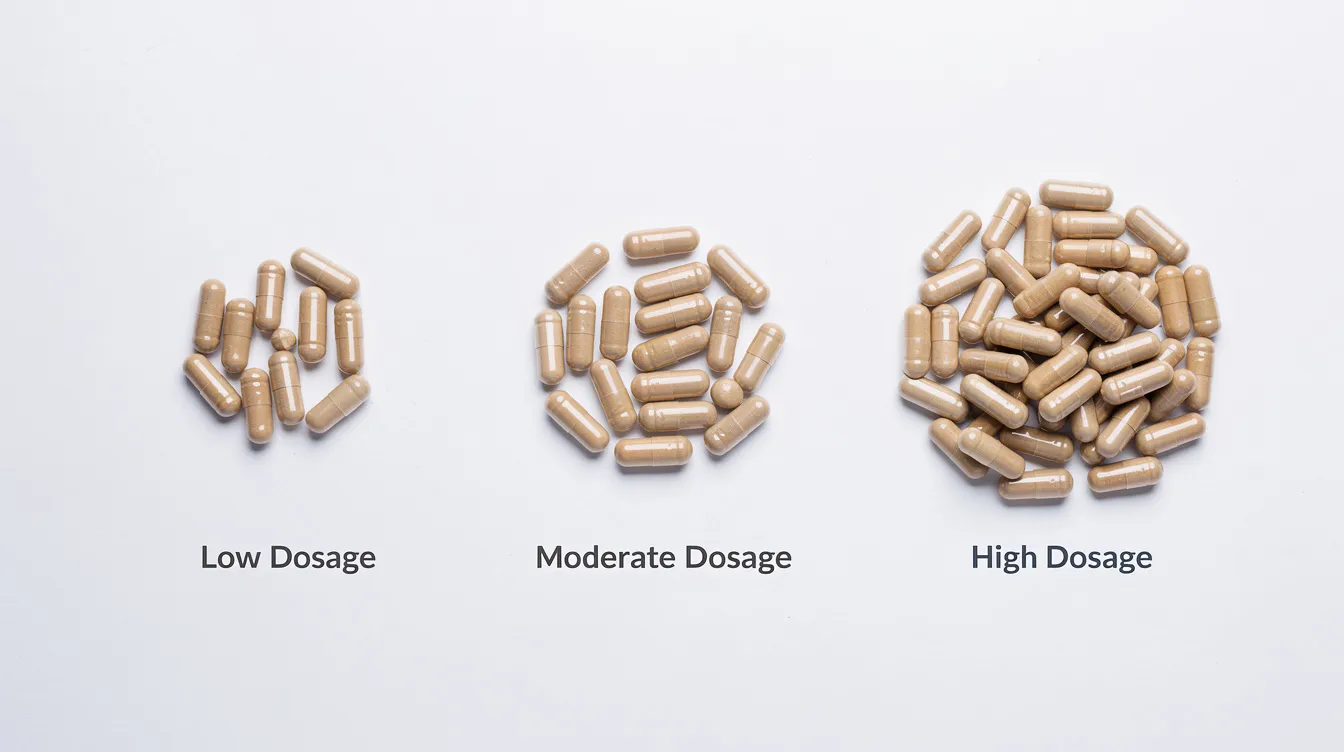
Low-Dose Tier: 100-300mg daily
- Modest NAD+ increase
- Suitable for initial tolerance testing
- Minimal side effects expected
- Good entry point for nmn supplementation beginners
Medium-Dose Tier: 300-600mg daily
- Significant NAD+ elevation
- Optimal physical performance gains (walking endurance, aerobic capacity)
- Balances efficacy and safety for most healthy middle aged adults
- Best evidence-to-risk ratio
High-Dose Tier: 600-900+ mg daily
- Peak NAD+ and functional gains
- Well tolerated up to 1250mg in trials
- Reserve for those not responding to lower doses
When escalating dose, do so incrementally. Start at 300mg for two weeks, then add 300mg if tolerated, monitoring for symptoms.
High Dose, Much NMN, and Risks
Human trials have tested doses up to 1250 mg daily without adverse effects. Laboratory values including liver and kidney function remained normal. The MIB-626 formulation tested 2000mg safely in formulation studies.
However, taking much nmn raises theoretical concerns:
- Cancer risk hypothesis: NAD+ fuels rapid cell proliferation, theoretically supporting tumor growth
- Reality check: No oncologic signals observed in human trials to date
- Limitation: Animal data lacks direct causation evidence
When using high dose regimens, monitoring is advised:
- Baseline and periodic liver function tests (ALT/AST)
- Kidney function markers (creatinine)
- NAD+ blood levels if available
- Regular clinical check-ins
When to Consider More NMN
Clinical signals suggesting you might benefit from dose escalation:
- Stagnant NAD+ levels despite supplementation
- No improvement in walking endurance or aerobic capacity
- Persistent fatigue unresponsive to current dose
- Metabolic markers (like HOMA-IR for insulin resistance) unchanged
Before increasing your nmn dose, consult a healthcare professional. Self-escalation without oversight isn’t recommended.
Biomarker tests to guide decisions include:
- Pre/post NAD+ blood levels
- 6-minute walk distance
- SF-36 quality of life assessment
- Insulin sensitivity via oral glucose tolerance test
Effects of NMN on Metabolic Health
Human studies document several metabolic health outcomes from NMN:
Insulin Sensitivity
- Improvements observed in prediabetic postmenopausal women
- Muscle insulin sensitivity appears enhanced through NAD+-dependent mechanisms
- May help address insulin resistance in at-risk populations
Aerobic Capacity
- 6-minute walk gains statistically significant (p< 0.01) at 300-900mg
- Physical performance improvements consistent across multiple trials
- Effects on muscle function linked to enhanced ATP production
Cardiometabolic Endpoints
- SF-36 vitality scores improved
- Potential benefits for heart health through reduced oxidative stress
- Short-term trials show no significant changes in lipids or glucose metabolism
Early studies suggest NMN may support blood sugar regulation, though more research is needed on age related diseases like alzheimer’s disease.

Guidance for Healthy Middle Aged Adults
If you’re considering taking nmn, follow this protocol:
Before Starting
- Obtain baseline NAD+ levels if testing is available
- Complete metabolic panel (fasting glucose, lipids, liver enzymes)
- Document 6-minute walk distance
- Complete SF-36 health assessment
Starting Dose
- Begin at 300 mg daily with breakfast
- After 2-4 weeks, titrate to 600mg if tolerated
- Monitor for any changes in sleep quality or energy
Follow-Up Testing
- Repeat labs and NAD+ at 30 and 60 days
- Performance tests quarterly
- Ongoing clinical supervision recommended
David Sinclair’s Protocol and Context
Harvard professor david sinclair has significantly influenced public discussion around NMN. He reportedly takes 1g NMN daily, often sublingual and combined with resveratrol.
Key context about his protocol:
- Exceeds the 600-900mg optimal dosage supported by clinical trials
- Administered under medical supervision as a researcher
- No personal trial data published validating this specific regimen
David sinclair’s approach reflects his role as a longevity researcher with medical oversight. Replicating his protocol without similar supervision carries potential risks.
The anti aging effects he discusses draw from both animal studies and emerging human research, but his personal dose remains higher than what recent research broadly validates.
Safety, Interactions, and Monitoring
Short-Term Side Effects
- None reported in clinical trials up to 1250mg
- Anecdotal reports of mild gastrointestinal discomfort
- Generally safe in studied populations
Conditions and Drugs Requiring Review
- Statins (potential interactions with NAD+ metabolism)
- Antidiabetic medications (additive effects on glucose metabolism)
- Hepatic or renal impairment (reduced clearance possible)
Monitoring Schedule
- ALT/AST every 3-6 months
- Creatinine periodically
- NAD+ levels if accessible
- Report any unusual symptoms to your clinician
This anti aging health product shows minimal side effects in trials, but long term administration data remains limited.
Practical How-To: Dosing, Timing, Formulation
Splitting Doses For higher totals like 600mg, consider splitting:
- 300mg with breakfast
- 300mg with lunch
- Rationale: Maintains steadier NAD+ levels throughout the day
Formulation Selection
- Prefer encapsulated pure NMN
- Microcrystalline forms may offer enhanced bioavailability
- Avoid products with unnecessary fillers
- NMN occurs nmn naturally in foods like raw beef and edamame, but supplemental forms provide therapeutic doses
Timing Strategies
- Take with meals as in clinical trials (post-breakfast common)
- Consistency matters more than exact timing
- Some users report better sleep quality with morning dosing
Frequently Asked Questions
Does more nmn always produce more benefit? No. Research suggests a plateau effect around 600mg for NAD+ elevation and physical performance. Higher doses don’t necessarily yield proportionally greater benefits, though they remain safe within tested ranges.
Is much nmn safe long term? Short-term safety up to 1250mg is excellent based on human trials. However, long-term safety beyond 12 weeks hasn’t been established. Safety concerns remain theoretical pending multi-year studies. Integr med approaches suggest cautious optimization rather than maximum dosing.
What’s the ideal trial length to detect benefits? Based on current evidence:
- NAD+ elevation: Detectable within 4 weeks
- Functional improvements: 60+ days recommended
- Aging biomarkers: Years needed for meaningful data
Publications in npj aging and sci rep continue investigating optimal duration. Researchers including yi l and liao b have contributed to understanding these timeframes.
Conclusion and Research Priorities
Current evidence points to 600 mg daily as the optimal dosage for most healthy middle aged adults seeking NAD+ and physical performance benefits. This anti aging molecule shows consistent safety up to 1200mg with proper monitoring.
Priority Research Needed:
- Multi-year RCTs examining longevity biomarkers
- Diverse population studies beyond middle aged adults
- Cancer risk assessment with long-term use
- Combination therapy investigations (NMN + resveratrol)
The potential benefits of nmn supplementation are promising, but age related conditions require more robust evidence before definitive claims. For now, a conservative approach—starting low, titrating carefully, and maintaining clinical oversight—represents the most responsible path forward.
Before beginning any nmn regimen, discuss your plans with a qualified healthcare professional who can help monitor your response and adjust your optimal dosage based on individual factors.