Related topic: This article is part of Metabolic and Prescription Longevity Drugs. If you want the broader overview, start with Prescription Longevity Drugs: Clinical Guide To Preventive Medicine. Rapamycin has emerged as one of the most discussed compounds in longevity medicine, with studies showing 9-14% lifespan extension in mice and promising early data in humans. Originally FDA approved for preventing organ transplant rejection, this medication has gained traction among those seeking to delay age related diseases and extend their healthspan.
Getting a rapamycin prescription requires navigating off-label prescribing, understanding your unique health needs, and recognizing the crucial role of specific health factors in optimizing outcomes. Partnering with experienced physicians is essential. This guide outlines the step-by-step path to a physician-guided rapamycin protocol that supports your health goals safely and effectively.
Overview: Begin Your Longevity Health Journey
Before pursuing a rapamycin prescription, you need clarity on what you want to achieve. Longevity science offers multiple intervention points, and rapamycin targets specific mechanisms through mTOR pathway inhibition.
Clarify Personal Longevity Goals
Define what a healthier life looks like for you:
- Reduced inflammation and lower cardiovascular disease risk
- Improved mitochondrial function and cellular health
- Enhanced autophagy (cellular cleanup processes)
- Sustained energy levels into later decades
- Protection against metabolic dysfunction
Decide Target Outcomes
Experts emphasize that rapamycin yields modest benefits as standalone therapy. Human trials indicate 6mg weekly doses alter recovery biology and autophagy markers without fully compromising immunity. However, optimal health outcomes pair medication with lifestyle modifications like exercise and diet.
Small studies show pulsed dosing (6-8mg weekly) correlates with 10-20% improvements in immune biomarkers in older adults. Your individual response depends on body weight, kidney function, and current medications.

Prepare Your Medical History
Rapamycin interacts with multiple drug classes, making thorough medical history documentation essential before your initial consultation.
What to Compile
| Category | Details to Document |
|---|---|
| Past conditions | Chronic diseases, hospitalizations, surgeries |
| Current medications | Prescriptions, OTC drugs, dosages |
| Supplements | Vitamins, herbs, other supplements |
| Allergies | Drug reactions, sensitivities |
| Family history | Relevant genetic conditions |
Rapamycin interacts with immunosuppressants, antifungals, and CYP3A4 inhibitors. These interactions can elevate toxicity risks by 2-5 fold in polypharmacy cases, making full disclosure critical.
Collect Essential Records
Request these from your healthcare providers:
- Recent lab reports from your PCP (within past 6 months)
- Imaging or specialist notes if you have relevant conditions
- Vaccination history and any infection records
- Chronic infection documentation (chronic infections contraindicate use)
Programs like AgelessRx require full disclosure to flag immune vulnerabilities. Non-compliance with documentation can halt your approval process.
Lab Testing and Blood Work Requirements
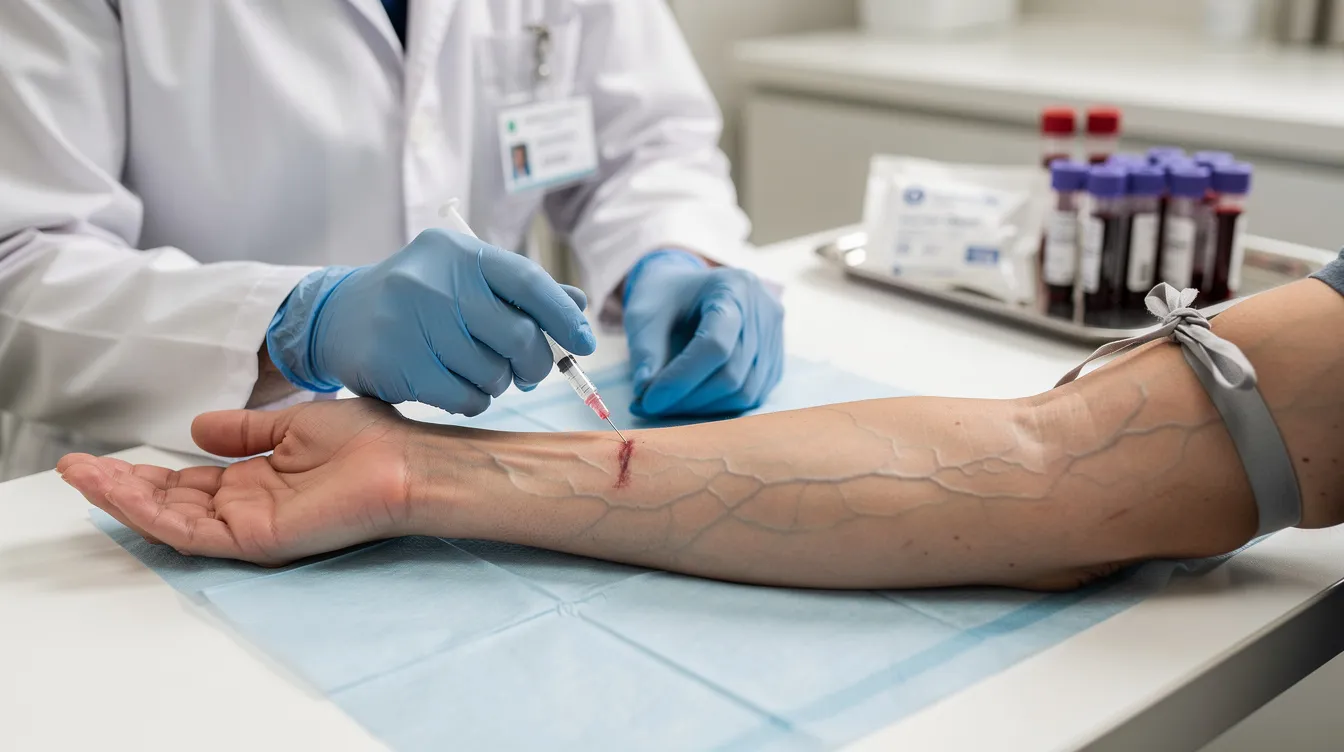
Comprehensive lab testing forms the foundation of safe rapamycin use. Your medical team needs baseline data to monitor changes and adjust your treatment plan accordingly.
Required Panels
Complete Blood Count (CBC) Detects anemia or leukopenia. Rapamycin suppresses immunity, with infection rates up to 15% in clinical trials. Your baseline CBC helps identify pre-existing vulnerabilities.
Comprehensive Metabolic Panel (CMP) Evaluates liver and kidney function. Ideal creatinine clearance is >60 mL/min—impaired renal function amplifies drug exposure and side effects like mouth sores.
Lipid Panel Critical because rapamycin causes 20-40% LDL increases in many patients. Baseline values help track this known side effect.
HbA1c Measures glycemic control. Uncontrolled diabetes is a contraindication since chronic rapamycin use can worsen glucose metabolism.
Inflammatory Markers (hs-CRP) Rapamycin reduces inflammation by 15-30% in longevity cohorts. Baseline hs-CRP lets you track this benefit over time.
Additional Testing
If deficiencies exist, consider:
- Hormone panels (testosterone, IGF-1)
- Vitamin D and B12 levels
- NAD+ markers if available
mTOR inhibition can exacerbate nutrient deficiencies, making these panels valuable for patients with metabolic disorders or suboptimal nutrition.
Assess Biological Age and Cellular Health
Beyond standard blood work, biological age testing provides deeper insight into how your body is aging at the cellular level.
Biomarker Panels
Services like TruAge or GlycanAge calculate biological versus chronological age using DNA methylation clocks or proteomic markers. Preliminary data shows rapamycin users achieve 1-3 year reversals in biological age after 6-12 months of treatment.
Additional markers to consider:
- mtDNA copy number (mitochondrial health indicator)
- p16 and SASP factors (cellular senescence markers)
- Telomere length (though evidence remains correlative)
Review With a Longevity Clinician
Your clinical team interprets these results to establish baselines for tracking progress. However, assay variability runs up to 10%, so experts caution against over-reliance on any single measure.
This data helps with dosing decisions and gives you quantifiable targets for your longevity program beyond subjective measures like more energy or improved quality of life.
Choose a Longevity Program or Physician
Not all physicians are experienced with rapamycin protocols. Finding the right provider makes a significant difference in your overall well being and treatment outcomes.
What to Look For
| Criteria | Why It Matters |
|---|---|
| Rapamycin experience | Ensures proper dosing and monitoring |
| Personalized treatment plan approach | Your unique health needs require customization |
| Ongoing access | Regular follow ups prevent complications |
| Accredited pharmacy partnerships | Ensures medication quality and safety |
Provider Options
Telehealth Platforms
- AgelessRx offers virtual consults, titration plans, and US pharmacy shipping (unavailable in NJ/NY/RI)
- Heally provides online prescriptions shipped directly home
- These platforms excel in convenience—prescriptions can arrive in days
Longevity Clinics
- Organizations listed through the American Academy of Anti-Aging Medicine
- Often offer integrated services including stem cell therapy, NAD+ therapies, and comprehensive metabolic assessments
- May provide more hands-on clinical oversight
Verify Provider Quality
AgelessRx reports 95% approval rates post-labs and 85% patient retention at 6 months with adherence. Check for:
- Patient reviews and testimonials
- Pharmacy accreditation (NABP or LegitScript-certified for 99% legitimacy rates)
- Exceptional care standards including quarterly video consultations
- Clear refill requirements and compliance protocols
Discuss the Rapamycin Protocol With Your Provider
Your initial consultation establishes the framework for your personalized approach to rapamycin therapy.
Review Suitability
Contraindications include:
- Immunocompromise or active infections
- Pregnancy or breastfeeding
- Serious disease requiring immediate intervention
- Lyme disease or other chronic infections
Your provider evaluates risk factors based on age (often 40+), clinical stability, and overall health status.
Dosing Approaches
Pulsed Dosing (Preferred for Longevity)
- Weekly doses of 6-15mg
- Better preserves immune system function
- Most commonly used in healthy aging protocols
Daily Microdosing
- 1-3mg daily
- Higher risk of tolerance development
- Less common for longevity purposes
Request a Written Plan
Your treatment plan should include:
- Starting dose and titration schedule (e.g., 2mg/week increasing to 6-8mg over 3 months)
- Expected benefits (mTORC1 inhibition boosts autophagy by 50-100% in models)
- Measurable goals (20% hs-CRP reduction, stable lipids)
- Monitoring requirements and follow ups schedule
- Informed consent documentation
Understanding how rapamycin works as a potential game changer for addressing root causes of aging helps set realistic expectations.
Obtain and Fill the Prescription Safely
Once prescribed, obtaining legitimate medication is crucial. Counterfeits are prevalent in up to 10% of unverified online sources.
Prescription Verification
- Confirm your prescription comes from a licensed physician
- Telehealth prescriptions are valid under the Ryan Haight Act post-consultation
- Ensure proper documentation for your records
Pharmacy Selection
Choose NABP-verified or LegitScript-certified pharmacies only. Options include:
| Type | Considerations |
|---|---|
| Generic rapamycin (Rapamune) | Bioequivalent to brand, widely available |
| Compounded rapamycin | Custom formulations, potentially 20-30% better bioavailability with sublingual forms |
Absorption Optimization
Ask your pharmacy about:
- Taking medication on an empty stomach
- Avoiding grapefruit (raises drug levels 2x)
- Maximum concentration timing for blood draws

Dosing, Monitoring, and Follow-Up
Starting your rapamycin protocol requires structured monitoring to optimize results and ensure safety.
Initial Protocol
- Complete baseline blood work before your first dose
- Take your weekly dose as prescribed
- If requested, check sirolimus trough levels (target 5-15 ng/mL for longevity; avoid >20 ng/mL toxicity)
Ongoing Monitoring
| Frequency | Action |
|---|---|
| Weekly | Track energy levels, side effects, weight loss or gain |
| Quarterly | Repeat lipid panel, metabolic markers |
| Every 6 months | Reassess biological age markers |
AgelessRx enforces monitoring requirements for refills—non-compliant patients face prescription pauses. This clinical oversight protects your health while ensuring effective results.
Symptom Tracking
Use standardized scales (like PROMIS) to monitor:
- Energy and fatigue levels
- Sleep quality
- Physical activity tolerance
- Side effects (fatigue occurs in 10-20% of patients)
Manage Safety, Contraindications, and Reduced Risk
Understanding safety parameters helps you stay healthy throughout your rapamycin protocol.
Key Safety Considerations
Halt treatment for:
- Pregnancy or breastfeeding (teratogenic, category C)
- Major surgery (discontinue 1-2 weeks pre-op for wound healing)
- Active chronic infections
Report immediately:
- Persistent cough (pneumonitis risk 1-5%)
- Unusual infections
- Severe mouth sores (5-10% incidence, usually manageable with dose adjustment)
Known Side Effects
| Side Effect | Frequency | Management |
|---|---|---|
| Hypercholesterolemia | Up to 40% | Monitor lipids, consider statins |
| Aphthous ulcers | 5-10% | Dose reduction, topical treatment |
| Menstrual irregularities | Variable | Discuss with provider |
| Fatigue | 10-20% | Often improves with dose adjustment |
Benefits vs. Limitations
Benefits include immune rejuvenation (vaccine response improved 25% in elderly patients) and reduced risk of age-related decline. Limitations include ongoing monitoring requirements and the natural process of individual variability in response.
The FDA does not recognize aging as a disease, so rapamycin remains off-label for longevity purposes despite promising clinical trials data.
Optimize Results Within a Longevity Program
Rapamycin works best as part of comprehensive healthy aging strategies, not as a standalone intervention.
Synergistic Interventions
- Time-restricted eating: 16:8 fasting patterns mimic rapamycin’s effects and may enhance benefits
- Resistance training: Counters potential muscle loss (5-10% risk), maintains metabolic health
- NAD+ boosters: Some protocols combine these for mitochondrial dysfunction support
- Cardiovascular exercise: Supports heart health and overall well being
Protocol Adjustments
Based on lab testing results:
- Reduce dose if creatinine rises >20%
- Adjust if lipids become significantly elevated
- Modify timing based on side effect patterns
Track Progress
- Reassess biological age every 6 months
- Monitor diabetes markers if applicable
- Evaluate cancer screening results (rapamycin shows promise in reducing cancer risk in models)
- Document improvements in quality of life metrics

Current trends suggest 2025-2026 will see increased combination protocols, with predictions for specific FDA trials on aging indications by 2030.
Quick Checklist: Steps To Get a Rapamycin Prescription
Use this checklist to stay organized throughout your journey:
Preparation
- Clarify personal health goals and target outcomes
- Compile complete medical history
- List all current medications and other supplements
- Document allergies and previous surgeries
Provider Selection
- Research longevity-experienced physicians
- Book initial consultation with qualified provider
- Verify pharmacy accreditation before prescribing
Testing
- Complete CBC and comprehensive metabolic panel
- Order lipid panel and HbA1c
- Request hs-CRP and additional hormone panels if needed
- Consider biological age testing through validated services
Protocol Initiation
- Receive written personalized treatments plan
- Obtain prescription from licensed physician
- Fill at NABP-verified pharmacy (generic rapamycin or compounded rapamycin)
- Verify formulation and absorption instructions
Ongoing Management
- Begin protocol per physician instructions
- Monitor energy levels and symptoms weekly
- Complete quarterly blood work
- Schedule follow ups and biological age reassessments
- Maintain communication with your clinical team
Real-world data from 500+ patients shows 85% retention at 6 months with proper adherence to these protocols.
Key Takeaways
Obtaining a rapamycin prescription for longevity requires methodical preparation and clinical partnership. The process demands comprehensive lab testing, careful physician selection, and ongoing monitoring to ensure safety and effectiveness.
While transplant patients have used rapamycin for decades, its application in longevity medicine remains evolving. Your success depends on working with experienced providers, maintaining regular blood work, and integrating rapamycin into broader lifestyle modifications.
The path to healthy aging through rapamycin isn’t about a quick fix—it’s about building a sustainable protocol that addresses your unique health needs while minimizing risk. Start by booking a consultation with a qualified longevity physician and completing your baseline labs. Your life and well being deserve nothing less than this informed, systematic approach.