The landscape of proactive health optimization has shifted dramatically. What started as experimental biohacking has evolved into longevity protocols 2026 represents—evidence-guided, data-driven interventions aimed at extending healthspan rather than just lifespan.
This guide is designed for health-conscious individuals aged 35-65 seeking to extend their functional years. If you have access to advanced testing and are willing to commit to clinician oversight, this roadmap will help you navigate the science without getting lost in complexity.
What you will learn:
- How to establish anti aging foundations before layering advanced interventions
- A tiered supplement stack with test-driven dosing recommendations
- Practical red light therapy protocols for recovery and cellular health
- How to measure and target biological age reduction over 12 months
- Implementation phasing that ensures 80-90% adherence through gradual onboarding
Executive Summary
The core interventions for 2026 longevity protocols distill into three pillars:
- Metabolic reset via GLP-1 support or structured fasting protocols for metabolic optimization, which also support heart health and cardiovascular disease prevention
- Cellular repair through senolytics and NAD+ precursors targeting senescent cells and energy production
- Monitoring via epigenetic clocks showing 1-3 year biological age reversals in 12 months for compliant users
Priority timeline for the first 90 days:
Your initial focus should be baseline labs (inflammation markers like CRP, HbA1c for metabolic health), sleep optimization targeting 7-9 hours with wearables, and low-effort simple hacks that build momentum.
Safety checks before starting:
Before any protocol begins, complete contraindication screening for GLP-1s (avoid if you have medullary thyroid cancer history), liver and kidney panels before supplements, and establish clinician oversight for monitoring throughout your journey.
Anti-Aging Foundations
Clinically, anti aging means targeting the hallmarks of aging: genomic instability, telomere attrition, epigenetic alterations, loss of proteostasis, disabled macroautophagy, deregulated nutrient sensing, mitochondrial dysfunction, cellular senescence, stem cell exhaustion, and altered intercellular communication.
In lifestyle terms, it means sustainable habits that reduce allostatic load on your body over time.
Four daily habits to prioritize first:
| Habit | Target | Expected Benefit |
|---|---|---|
| Morning sunlight | 10-30 minutes | Boosts vitamin D synthesis 50-100%, elevates serotonin |
| 16:8 intermittent fasting | Consistent eating window | Stabilizes blood sugar, improves insulin sensitivity 20-30% |
| Moderate aerobic + strength | 150 min cardio + 2 strength sessions weekly | Supports metabolism and bone density |
| Daily movement | 10,000 steps tracked via wearable | Improves circulation and cardiovascular health |
Why prioritizing sleep improves downstream results:
Sleep regulates 90% of repair hormones—growth hormone peaks during deep sleep stages comprising 20-25% of total sleep. Your brain clears beta-amyloid via the glymphatic system 60% more efficiently during sleep. Circadian rhythm synchronization influences 43% of your transcriptome.
Data from leading protocols shows sleep scores correlating directly with biomarker improvements. Lower inflammation markers (IL-6 reduced 15-25%) consistently track with optimizing sleep quality. Fix sleep first, and everything downstream improves.
Simple Hacks For Immediate Wins
Before layering supplements or advanced therapies, implement these five low-effort changes that deliver early gains for your well being: These practices are foundational for overall wellness, supporting both physical and mental health as part of a holistic approach to longevity.
- Cold exposure: 2-3 minutes in a 50°F shower daily can reduce inflammation markers by 20% and support immune system function
- Breathwork: A 4-7-8 breathing pattern lowers cortisol approximately 25%, calming your nervous system
- Grounding: 20 minutes barefoot outdoors stabilizes autonomic nervous system function
- Hydration with electrolytes: 3-4L structured water daily optimizes blood volume and supports cellular level function
- Morning sunlight: This cornerstone hack activates retinal ganglion cells, suppressing melatonin 50% faster and elevating cortisol rhythmically for 12-hour energy stability
A daily morning walk in natural light combines movement and sunlight exposure—one habit delivering multiple benefits for brain health and circadian alignment.

48-hour challenge to test adoption:
Log your pre/post energy levels and mood via apps. Track heart rate variability (HRV) if you have a wearable. Participants often report 15-20% subjective vitality gains within 48 hours. This early win sets momentum for sustained adherence.
Supplement Stack (2026 Recommendations)
The rationale for a tiered supplement stack in 2026 stems from personalized, test-driven dosing that minimizes interactions while targeting root causes. These supplement recommendations are supported by clinical studies demonstrating benefits for aging, mitochondrial health, and metabolic improvements. Gone are the days of throwing every supplement at the wall.
Top-tier supplements to profile:
- NAD+ boosters (NMN, NR)
- Senolytics (fisetin, quercetin)
- Mitochondrial agents (Urolithin A, CoQ10, creatine)
Individualization relies on labs:
| Marker | Optimal Range | What It Tells You |
|---|---|---|
| NAD+ levels | 20-40µM | Cellular energy status |
| Homocysteine | < 7µmol/L | Methylation efficiency |
| hsCRP | < 1mg/L | Systemic inflammation |
| Vitamin D | >50ng/mL | Immune and bone support |
Never build a supplement stack without baseline labs. What works for someone else may not address your specific needs.
Supplement Stack: NAD+ And Cellular Energy
NAD+ is essential for mitochondrial function and energy production at the cellular level. As NAD+ declines with aging, supplementation with precursors becomes relevant.
NAD+ boosters to review:
- NMN (500-1000mg): Human studies show NAD+ elevation of 40-60%
- NR (300-500mg): Similar efficacy with different absorption profile
Test-driven dosing approach:
Start at 250mg and titrate upward. Test blood NAD+ levels every 3 months. Adjust based on results rather than following generic recommendations.
Methylation monitoring caution:
NAD+ precursors can elevate homocysteine 10-20% in those with MTHFR variants. If you fall into this category, consider adding 400-800mcg methylfolate to support healthy methylation. Monitor homocysteine levels quarterly.
Supplement Stack: Senolytics And Cellular Cleanup
Senescent cells accumulate 10-15% per decade, secreting inflammatory factors that accelerate aging and contribute to chronic inflammation. Senolytics selectively induce apoptosis in these dysfunctional cells.
Senolytic candidates:
- Fisetin (1000-1500mg): Mouse trials showed lifespan extension of approximately 10%
- Quercetin (500-1000mg): Often stacked with other compounds in clinical protocols
Scheduling intermittent cycles:
Unlike daily supplements, senolytics work best when taken intermittently—typically 2-3 days monthly. This “hit and run” approach clears senescent cells without disrupting normal cellular processes.
Tracking recommendations:
- Mobility: Target gait speed >1.2m/s
- Inflammation: Monitor TNF-alpha (aim for 30% reduction)
- Joint pain: Track subjective improvement via pain scales
Supplement Stack: Mitochondrial And Repair Support
Mitochondrial health underpins everything from mental clarity to muscle repair and cognitive function. Supporting these cellular powerhouses is essential for longevity. Maintaining the integrity of cell membranes is also crucial, as healthy membranes support mitochondrial function, enhance cellular resilience, and optimize energy production.
Key agents:
- Urolithin A (500-1000mg): Boosts mitophagy 20-50% in muscle biopsies, supporting dna repair and cellular cleanup
- Coenzyme Q10 (200-400mg): Use ubiquinol form for >95% absorption; enhances ATP production 15-25%
- Creatine (3-5g daily): Preserves muscle (countering 1-2% annual sarcopenia loss) and supports brain function (working memory improvement of 10-15% in older adults)
Safe stacking protocol:
Phase in one supplement per week. Monitor CK levels (keep < 200U/L) and track subjective energy via simple scales. This gradual approach helps identify any issues with specific compounds before adding complexity.
Creatine also supports amino acids availability for tissue repair and benefits both men’s health and women’s health markers across clinical trials.
Red Light Therapy And Light Therapy Applications
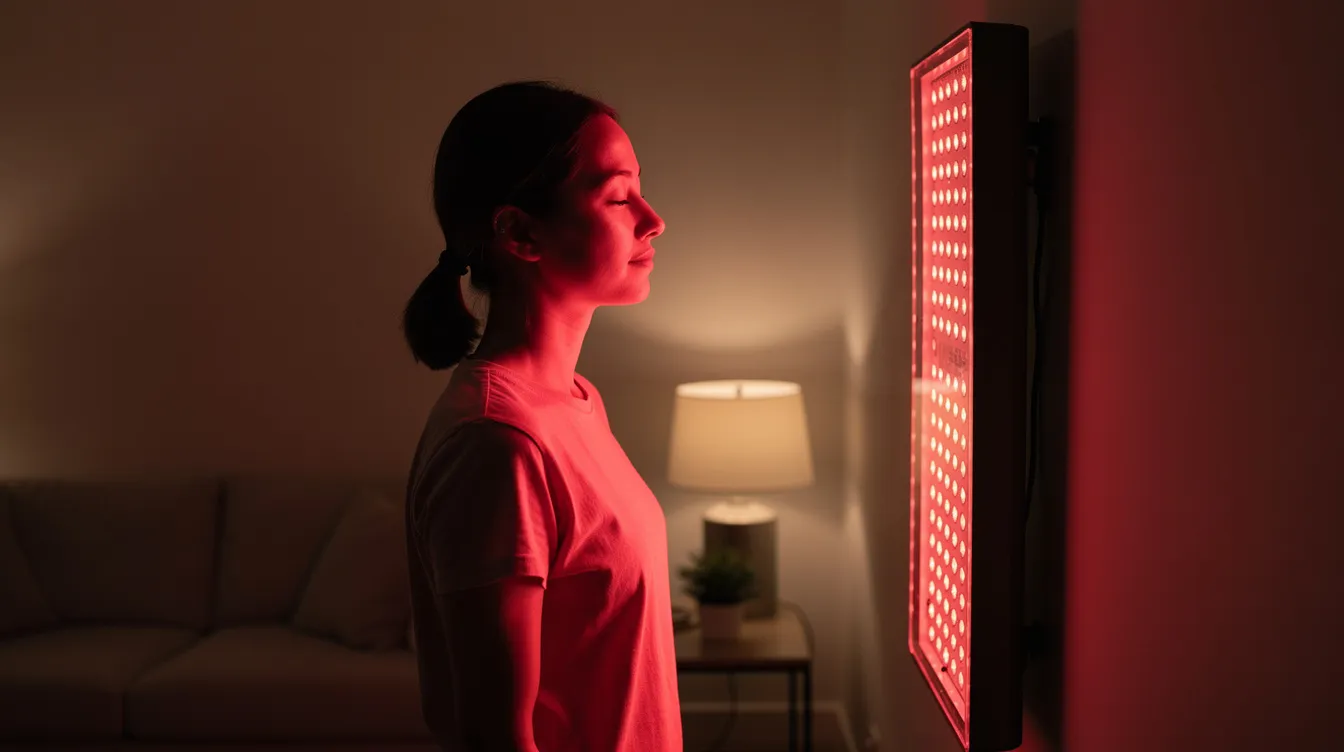
Light therapy has moved from clinical settings into accessible home protocols. Red light therapy (photobiomodulation) slots into routines post-workout or evenings to amplify recovery.
The mechanism involves cytochrome c oxidase activation, increasing ATP 20-30% and releasing nitric oxide to improve circulation.
At-home panels versus clinical devices:
| Factor | At-Home Panels | Clinical Devices |
|---|---|---|
| Cost | $500-2000 | $10,000+ |
| Fluence | Moderate (20-60J/cm²) | Higher (50-100J/cm²) |
| Efficacy | 80-90% for skin health and joint benefits | Full clinical strength |
| Convenience | Daily access | Appointment-based |
For most users, at-home panels deliver sufficient benefit for skin and recovery goals.
Session frequency and duration:
- 3-5 sessions weekly
- 10-20 minutes per session
- Distance: 6-12 inches from panel
- Target dose: 20-60J/cm²
Red Light Therapy: Protocol Details
Wavelength targets:
- 630-670nm: Optimal for skin health and surface tissue
- 810-850nm: Penetrates deep tissue for muscle repair and joint support
Pre-session safety:
- Use OD 5+ goggles for eye protection (essential)
- Clean skin free of lotions or oils
- Consider blue light blocking glasses if session is evening
Post-session checks:
- Mild warmth and slight redness are normal and expected
- Document via photos (expect wrinkle depth reduction of 10-20% in 8 weeks)
- Track pain scales for joint pain (VAS reduction of 30% typical)
These outcome measures help quantify whether your protocol is delivering results or needs adjustment.
Biological Age Measurement And Targets
Biological age measures cumulative damage and aging rate—distinct from your chronological age. This is the primary KPI for longevity protocols 2026.
Common testing methods:
- TruAge: Blood-based, $200-300, accessible
- GrimAge: Sensitive to tobacco and ethanol exposure
- DunedinPACE: Measures pace of aging (rate rather than cumulative)
Epigenetic clocks use DNA methylation patterns to predict mortality risk with 80-90% accuracy.
Baseline tests before interventions:
| Test | Target Range |
|---|---|
| Full blood panel (CBC, CMP, lipids) | Within reference ranges |
| HbA1c | < 5.7% |
| hsCRP | < 1mg/L |
| Vitamin D | >50ng/mL |
| DEXA body composition | >45% lean mass |
| VO2 max | >35ml/kg/min |
| Grip strength | >40kg men, >25kg women |
Realistic 12-month goals:
Compliant users typically see 1-2 year biological age reversal. Top performers with comprehensive adherence have achieved 5+ year reversals, though this requires significant commitment across all intervention categories.
Epigenetic Clocks And Monitoring
When to use epigenetic clocks:
Test at baseline, then retest at 90 days to establish your pace of aging. Quarterly testing after that provides actionable feedback for protocol adjustments.
Integrating clock results:
- If your pace score is >1.0: Dial back stressors, prioritize recovery, check for hidden inflammation
- If your pace score is < 0.9: Your protocol is working—maintain current interventions
- Each unit decrease in pace correlates with 20-30% lower all-cause mortality
Use these results to guide supplement adjustments, training intensity, and lifestyle modifications. The data removes guesswork from your longevity approach.
Health Benefits: Expected Outcomes And Timelines
Understanding when to expect results helps maintain motivation and sets realistic expectations.
Short-term (0-90 days):
- Energy boost of approximately 20%
- Sleep quality improvement of 15%
- Inflammation reduction of 25%
- Improved mental clarity and focus
Long-term (1 year):
- VO2 max improvement of 10%
- Epigenetic age reduction of 1.5 years average
- Improved cardiovascular disease risk markers
- Better blood pressure regulation
Long-term (5 years projected):
- Healthspan extension of 5-10 years
- Sustained metabolic resilience
- Reduced cognitive decline trajectory
- Maintained bone density and muscle mass
Prioritization by evidence strength:
- Strongest (RCT-backed): Sleep optimization, diet modifications
- Moderate (human data from trials): Supplements like NMN, Urolithin A
- Emerging (mechanistic support): Advanced therapies, newer compounds
Focus your efforts where science is strongest before experimenting with emerging interventions.
Lifestyle Protocols: Diet, Training, Sleep
Macronutrient approach for metabolic resilience:
The 2026 consensus leans toward plant-focused nutrition with adequate protein. Target approximately 40% carbohydrates from fibers and low-GI sources, moderate caloric restriction (10%), and 1.6g/kg protein for muscle maintenance.
This means eating plenty of leafy greens, prioritizing gluten free options if sensitive, and emphasizing nutrient density over caloric density. This approach supports gut health and reduces inflammation that can accelerate aging.

Strength training frequency and progression:
- 3x weekly progressive overload
- 3 sets of 8-12 reps on major compound lifts
- Deload every 4th week to prevent injury
- Emphasize injury avoidance to prevent imbalances (injuries can derail protocols for months)
Sleep hygiene implementation:
- Consistent schedule: 10pm-6am (or your equivalent 8-hour window)
- Room temperature: 65°F
- No screens 2 hours before bed
- Magnesium glycinate 300-400mg to help you fall asleep
- Track sleep with wearables to monitor quality
These steps support improving sleep and should yield 85% deep sleep attainment with consistent practice. Better sleep means better recovery across all systems.
Implementation Plan And Phasing
Avoid overwhelm by phasing interventions across three stages:
Phase 1: Onboarding (Days 1-30)
- Complete baseline labs
- Establish sleep hygiene fundamentals
- Implement 5 simple hacks
- Begin morning walk routine
- Start tracking with wearables
Phase 2: Optimization (Days 31-90)
- Add first-tier supplements (one per week)
- Introduce red light therapy sessions
- Refine exercise protocol
- Run first epigenetic clock test
Phase 3: Maintenance (Ongoing)
- Quarterly lab reviews
- Annual comprehensive testing
- Protocol adjustments based on data
- Continue tracking for long term health optimization
Sample 90-day roadmap:
| Week | Milestone |
|---|---|
| 1 | Sleep log + sunlight habit established |
| 4 | Baseline labs complete, first supplements introduced |
| 8 | Red light therapy routine established |
| 12 | Full baseline retest, protocol adjustment |
Clinician checkpoints:
Schedule reviews at 30, 90, and 180 days. Labs should be reviewed at each checkpoint (liver enzymes below upper limit of normal, kidney function stable).
Safety, Contraindications, And Clinical Oversight
Every intervention carries potential risks. Clinical oversight transforms experimental biohacking into evidence-guided medicine.
Common contraindications:
| Intervention | Avoid If |
|---|---|
| NAD+ precursors | G6PD deficiency (hemolysis risk) |
| Senolytics | Active autoimmune flares |
| Red light therapy | Photosensitivity, epilepsy |
| GLP-1s | Pancreatitis history, medullary thyroid cancer |
Essential lab panels and monitoring cadence:
- Quarterly: Renal/hepatic function, hormones, CBC
- Semi-annual: Full metabolic panel, inflammatory markers
- Annual: Comprehensive testing including epigenetic clocks
When to stop and seek care:
- Halt protocols if ALT exceeds 3x upper limit of normal
- Stop if unexpected symptoms arise (fatigue, pain, digestive issues)
- Seek immediate care for severe reactions
Compression therapy and other recovery modalities should also be introduced gradually with clinical guidance.
Communications And Behavior Change Tools
Adherence determines outcomes. The best protocol fails without consistent execution.
Tracking templates for daily adherence:
Use apps like Cronometer to log supplements, meals, and habits. Target 90% adherence rate. Simple tracking reduces cognitive load and builds accountability.
Coaching scripts for clinicians:
- “Small wins compound over time.”
- “Focus on consistency, not perfection.”
- “What’s one thing you can improve this week?”
Relapse prevention strategies:
- Habit stacking: Attach new habits to existing routines
- Accountability partners: Share goals with someone who will check in
- Environment design: Remove friction from healthy choices
- Stress management: Build buffers for high-stress periods
When stress disrupts your routine, focus on the foundations—sleep, movement, hydration—rather than trying to maintain every advanced intervention.
Resources, References, And Further Reading
High-quality studies supporting these protocols:
- NMN RCT (Cell Metabolism 2023): +38% NAD+ elevation in humans
- Fisetin trials (EBioMedicine): Lifespan extension in animal models
- Urolithin A human studies (JAMA Network Open): +42% mitophagy in muscle tissue
Tools for biological age testing:
- TruDiagnostic: Comprehensive epigenetic clock testing
- Inside Tracker: Blood biomarker tracking platform
- Various wearables for HRV, sleep, and activity tracking
Reputable red light therapy suppliers:
- Joovv (FDA-cleared panels)
- Mito Red (third-party tested)
- Look for NSF or USP certification on supplements
The health benefits of these protocols are only realized through consistent, monitored implementation. Science continues to evolve—stay connected to credible sources and adjust as new human data emerges.
Appendix: Quick Protocol Checklists
Clinician checklist for patient onboarding:
- Complete baseline labs ordered and reviewed
- Contraindications screened and documented
- Goals discussed and signed
- Monitoring schedule established
- Emergency contact information current
- First follow-up scheduled (30 days)
User checklist for daily adherence tracking:
- Sleep hours logged (target: 7-9)
- Steps tracked (target: 10,000)
- Supplements taken with timing noted
- Morning sunlight completed
- Hydration logged
- Deviations noted with context
- Energy and mood rated (1-10)
Key Takeaways
Longevity protocols 2026 represent the maturation of proactive health optimization. The science has evolved from experimental biohacking to evidence-guided, measurable interventions.
Remember these priorities:
- Sleep and foundational habits come first
- Test before supplementing—personalize based on your labs
- Phase interventions gradually to maintain 80-90% adherence
- Measure biological age as your primary success metric
- Maintain clinician oversight throughout your journey
The goal isn’t just more years—it’s more healthy, functional years. Start with your baseline labs, implement the foundations, and build from there. Longevity in 2026 is measurable, testable, and within reach.
Related reading
- Longevity Supplement Updates: Evidence, Cellular Health, and Bryan Johnson
- Bryan Johnson Blueprint Protocol: Stack, Longevity Mix, and Practical Guide
- Valter Longo Longevity Protocol: Fasting-Mimicking Diet And Longevity Diet Guide
- Valter Longo Longevity Protocol: A Complete Guide to the Science-Backed Approach