Related topic: This article is part of Demographic and Budget Protocols. If you want the broader overview, start with Personalized Longevity Protocols: A Practical Guide to Extending Healthspan. What if the smallest changes delivered the biggest returns on your lifespan? The concept of minimum effective dose longevity borrows from medicine—specifically, the idea that there’s a threshold below which an intervention does nothing and above which you get diminishing returns.
For longevity, this means identifying the smallest inputs in exercise, nutrition, sleep, and skincare that produce measurable life extension. Research suggests these thresholds are far lower than most people assume.
This article breaks down the data on what actually moves the needle—and provides a structured course or sequence for implementing minimum effective dose longevity habits, giving you a practical framework and well-planned progression to achieve results without overhauling your entire life.
Physical Activity: Minimum Effective Dose To Live Longer
Here’s what the data shows: you don’t need a gym membership or marathon training to live longer. A massive prospective study of 109,407 Chinese adults identified a precise longevity floor—just 75 minutes of total physical activity per week.
That’s roughly 11 minutes daily.
At this threshold, participants experienced an 11% reduction in all-cause mortality compared to inactive subjects. Researchers found the dose-response curve was L-shaped: initial low doses provided outsized benefits, then plateaued around 2,400 minutes weekly with no additional statistical gain.
Understanding MET-Hours
MET-hours measure energy expenditure simply. One MET equals resting metabolism. Brisk walking hits 3-4 METs, so 15 minutes of walking equals about 1 MET-hour.
Even a 1-MET increase in VO2 max correlates to a 12% survival improvement.
This makes tracking your dose straightforward without complex calculations.
Activity Comparison Table
| Activity | METs | 15-Min Equivalent |
|---|---|---|
| Brisk walking | 3.8 | ~1 MET-hour |
| Gardening | 3.5 | ~0.9 MET-hours |
| Slow swimming | 4.0 | ~1 MET-hour |
| Gentle yoga | 2.5 | ~0.6 MET-hours |
| Light cycling | 4.0 | ~1 MET-hour |
Recommendation: Target 5-15 minutes of Zone 1-2 activity daily. A 10-minute walk after lunch consistently adds up to your weekly floor.
Addressing Confounding Risk
Observational studies carry self-selection bias—healthier people naturally exercise more. However, researchers adjusted for baseline factors like HbA1c levels and VO2 max, strengthening causality claims. The findings hold across age groups, with adults over 60 seeing a 22% mortality reduction even at sub-guideline doses.
Diminishing Returns Caveat
More isn’t necessarily better. Beyond 2,400 minutes weekly (roughly 5.7 hours daily), confidence intervals widen and injury risk increases. The sweet spot exists between the floor and overtraining—a range most people never approach.

Nutrition And Sleep: Minimal Changes That Help You Live Longer
Tiny diet swaps move the mortality needle more than you’d expect. University-level meta-analyses show:
- Replacing 5% of saturated fats with polyunsaturated fats reduces mortality by 27%
- Adding one serving of nuts daily (30g) cuts risk by 21%
- Increasing fiber by 10g/day lowers cardiovascular death by 15-30%
These micro-changes activate beneficial mechanisms like improved endothelial function and reduced inflammation. You don’t need a complete dietary overhaul—just targeted swaps.
Sleep Targets
Sleep operates similarly. The difference between 6 hours and 7 hours nightly isn’t trivial. Adding 30-60 minutes from a deficient baseline boosts longevity estimates by 10-20% through restored glymphatic clearance and telomere preservation.
Combined benefits compound: 75 minutes of weekly activity plus 30 extra sleep minutes yields 15-25% mortality reductions through enhanced autophagy.
Practical example: Swap one soda for water daily (reducing 150kcal) and add a 10-minute pre-bed wind-down to gain 45 minutes of quality sleep. Small form, large function.
Skincare For Mature Skin: Minimum Effective Dose For Aging Skin
There’s a distinction between intrinsic aging (chronological, genetic) and extrinsic aging (photoaging from UV exposure). Mature skin after 40 shows measurable changes:
- Thinner epidermis (20% reduction)
- Hyaluronic acid levels drop 50%
- Cell turnover slows significantly
- Collagen decreases 28% per decade
Dermatologists recommend starting minimal anti-aging routines at 30-35 to preempt visible signs. The goal isn’t aggressive treatment—it’s consistent, gentle intervention that supports skin barrier function over time.
First Signs: Early Aging Skin Signals
Monitor these first signs to catch aging skin early:
| Sign | Cause | Simple First Response |
|---|---|---|
| Fine lines | Elastin fragmentation | Gentle retinoid (0.1%) |
| Hyperpigmentation | Melanin clumping (80% UV-induced) | Daily SPF 30+ sunscreen |
| Dryness | Ceramide depletion (30% less by 50) | Humectant moisturizer |
| Loss of elasticity | Collagen reduction | Vitamin C serum |
| Enlarged pores | Reduced skin plump | Hyaluronic acid hydration |
Early intervention keeps these manageable. Waiting until wrinkles deepen makes correction harder.
Retinol Serum: Low-Dose Use For Mature Skin
A retinol serum is specifically designed for collagen stimulation, but starting too strong causes irritation. The minimum effective dose approach:
Starting frequency: 0.1-0.25% strength, 1-2 nights weekly
Escalation schedule:
- Weeks 1-4: Twice weekly application
- Weeks 5-8: 3-4 nights weekly
- Month 3+: Consider 0.5% strength quarterly
Irritation signs to watch:
- Redness beyond mild pinkness
- Flaking or peeling
- Tightness indicating barrier compromise
If you experience these, pause for 3 days and buffer with a hydrating serum. The treatment works through gradual retinoid receptor upregulation—rushing it backfires. Formulated correctly, even low doses boost collagen 80% over 6 months.
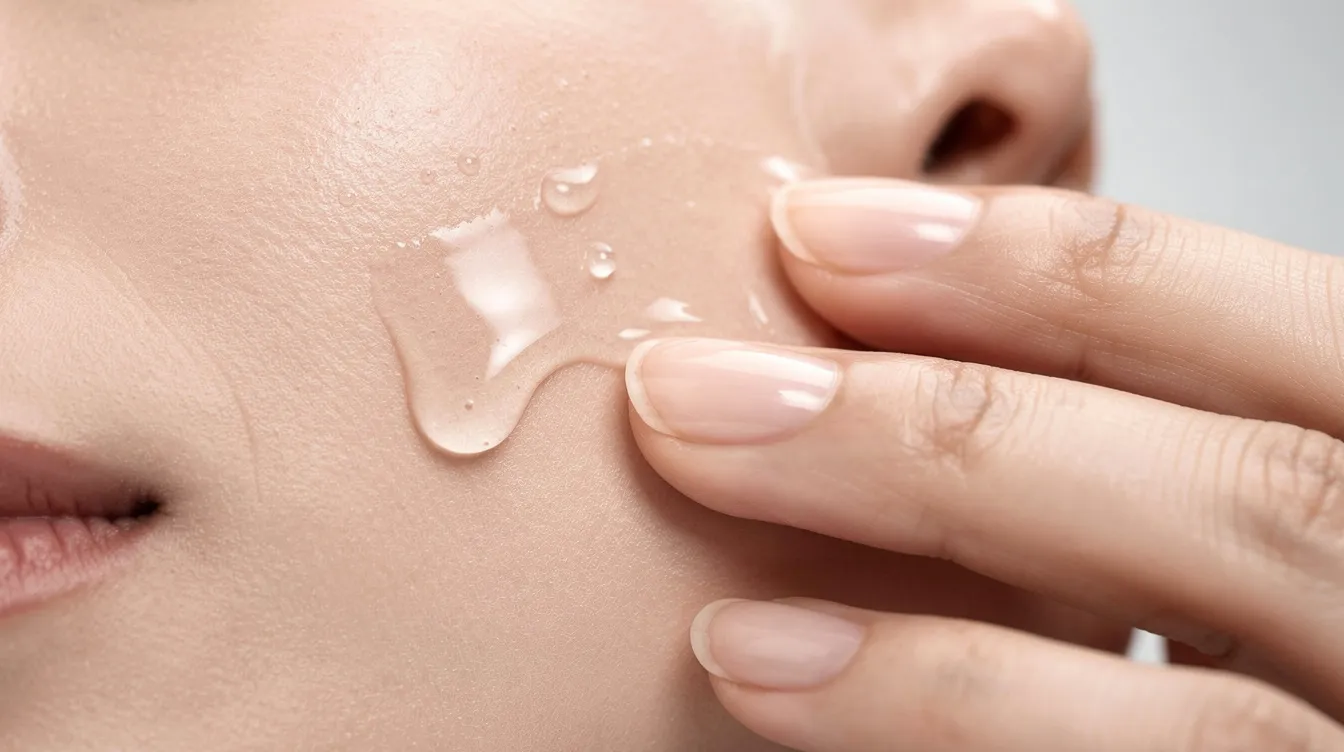
Hyaluronic Acid: Hydration For Mature Skin
Hyaluronic acid draws 1,000 times its weight in water, making it ideal for drier skin that’s lost moisture capacity.
Morning routine: Apply 1-2% hyaluronic acid serum post-cleansing on damp skin. Follow with moisturizer to seal hydration. This helps plump and smooth the skin surface, reducing the appearance of fine lines.
Evening hydration: Use low-molecular-weight HA (under 50kDa) for deeper penetration. This form reaches dermal layers where mature skin is most deficient, restoring up to 40% moisture in subjects over 50.
The right products hydrate without heaviness. Look for non irritating formulations that layer well under other actives.
Vitamin C: Morning Antioxidant Habit
Apply 10-20% L-ascorbic acid (vitamin C) mornings before sunscreen. This combination:
- Neutralizes 99% of free radicals via electron donation
- Boosts collagen synthesis 8-fold
- Fades pigmentation by 25%
Optional enhancement: Pair vitamin C with 0.5% ferulic acid, which stabilizes the vitamin 8-40 times against oxidation. This combo delivers radiant skin benefits that compound over time.
SPF remains non-negotiable—it blocks 97% of UVB rays causing photoaging. The vitamin C layer adds antioxidant protection underneath.
Build A Minimum Effective Dose Routine To Live Longer
Theory means nothing without implementation. Here’s a weekly micro-habit template that integrates everything:
| Day | Activity | Skincare | Nutrition/Sleep |
|---|---|---|---|
| Monday | 11-min walk | HA + Vitamin C AM | — |
| Tuesday | 11-min walk | HA + SPF | 30g nuts added |
| Wednesday | 11-min walk | Retinol PM | — |
| Thursday | Rest or gentle yoga | HA evening | +15 min sleep |
| Friday | 11-min walk | Retinol PM | 30g nuts added |
| Saturday | Active play (15 min) | HA + Vitamin C AM | — |
| Sunday | Rest | Retinol PM | +15 min sleep, refresh weekly plan |
Wearable Prompts
Use Apple Watch or Fitbit movement reminders to nudge short activity bouts. Set alerts at 75-minute weekly compliance thresholds. Track MET-hours if your device supports it.
Progress Check-In Template
Weekly, assess:
- Hit 75+ minutes total activity?
- Sleep efficiency above 85%?
- Skin elasticity via pinch test (does it snap back quickly?)
- Any irritation from actives?
Troubleshooting Setbacks
- Activity setbacks: Halve to 5 minutes rather than skipping entirely
- Retinol irritation: Pause 3 days, buffer with HA, resume at lower frequency
- Sleep regression: Focus on 10-minute wind-down before addressing duration
Editorial Elements And Evidence

Key Study Citations
The findings referenced throughout draw from:
- Chinese cohort study (109,407 participants) on physical activity thresholds
- Meta-analyses on saturated fat replacement published in major university journals
- Dermatological research on retinoid receptor upregulation and collagen synthesis
FAQ: Common Objections
Q: Isn’t 11 minutes too little to make a difference? A: The data consistently shows this floor produces measurable mortality reduction. It’s not optimal—but it’s effective and sustainable over a decade or longer life.
Q: Will low-dose retinol actually work? A: Yes. Starting gentle prevents barrier damage while allowing receptor adaptation. You’ll achieve better long-term results than aggressive early use.
Q: What if I’m already active—do these factors still apply? A: The diminishing returns curve means additional health benefits plateau. Focus energy on sleep and skincare if activity is already covered.
Q: How young should I start skincare? A: Experts suggest 30-35 for prevention. If you’re seeing first signs earlier, gentle hydration and sunscreen are beneficial at any age.
The minimum effective dose for longevity isn’t about doing more—it’s about doing enough, consistently. Eleven minutes of walking. One nut serving. Thirty extra sleep minutes. A drop of retinol twice weekly.
These doses compound across years. Start with one micro-habit this week, track your progress, and let the data guide your adjustments. Your future self—healthy, active, and thriving—will thank you.