Related topic: This article is part of Emerging and Fringe Protocols. If you want the broader overview, start with Emerging Longevity Protocols: Practical Outline for Research and Practice. Can removing your plasma and replacing it with fresh fluids actually reverse aging? This question drives growing interest in plasmapheresis longevity research—a field where preliminary science meets significant hype. This article examines the evidence, framing plasma exchange as an experimental intervention grounded in emerging clinical data rather than a proven anti-aging therapy. The aim of current research and this article is to demonstrate the effectiveness of plasma exchange as a longevity intervention, with a focus on establishing evidence that it can impact biological aging and healthspan.
We’ll cover how therapeutic plasma exchange works, what the Buck Institute findings actually show, and what prospective patients should know before pursuing this treatment.
What Is Plasma Exchange Therapy?
Plasma exchange therapy is a medical procedure that removes a patient’s plasma from the blood and replaces it with a substitute fluid to eliminate harmful circulating substances. By exchanging plasma, this therapy helps reset or cleanse the body’s internal environment, which may promote renewal, longevity, and optimize overall body function.
The terminology matters here:
- Plasmapheresis refers broadly to the apheresis process of separating plasma from blood cells
- Therapeutic plasma exchange (TPE) specifically involves discarding the patient’s plasma and replacing it
Common clinical indications for plasma exchange include:
| Condition Category | Examples |
|---|---|
| Autoimmune disorders | Myasthenia gravis, Guillain-Barré syndrome |
| Neurological conditions | Chronic inflammatory demyelinating polyneuropathy |
| Blood disorders | Thrombotic thrombocytopenic purpura |
| Renal diseases | Goodpasture’s syndrome |
TPE is used to treat these conditions and is also being investigated as a treatment for influencing biological age and related biomarkers. These established uses provide compelling evidence for the procedure’s safety profile, though longevity applications remain investigational.
How Therapeutic Plasma Exchange Works
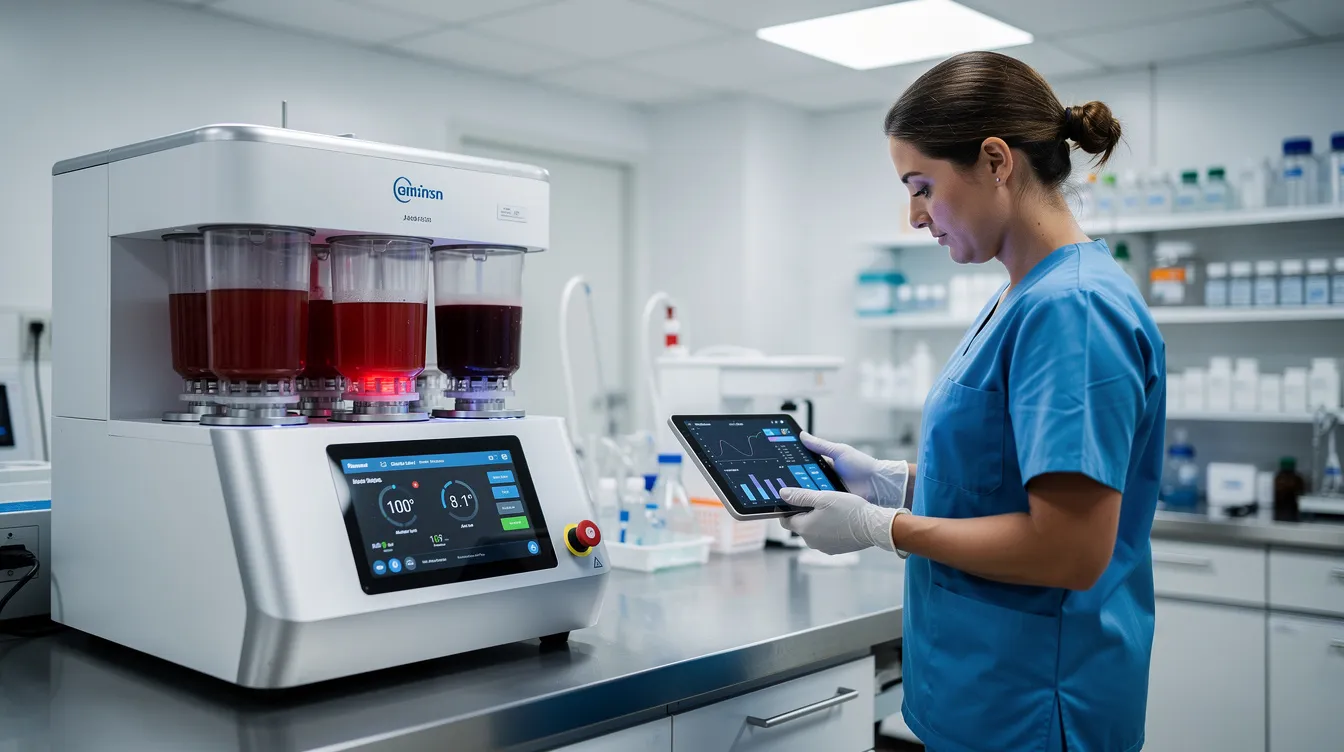
The basic apheresis procedure follows a standardized process:
- A large-bore catheter is inserted into a vein, typically in the arm
- Blood is withdrawn and passed through an apheresis machine
- The machine separates plasma from cellular components via centrifugation or membrane filtration
- Cellular components return to the patient along with replacement fluid
Each session processes 1 to 1.5 plasma volumes and lasts 2 to 4 hours.
Replacement fluids commonly include 5% albumin solution or fresh frozen plasma. When intravenous immunoglobulin (IVIG) is added post-exchange, it replenishes antibodies and may modulate immune responses—a combination that showed enhanced results in recent trials.
One of the proposed benefits of plasma exchange in the context of longevity is its potential to slow the accumulation of age-related proteins and metabolic waste in the bloodstream, thereby potentially slowing the aging process.
Treatment schedules in longevity research vary. The Buck Institute trial used monthly sessions for TPE-only treatment groups and biweekly sessions when combined with IVIG.
Mechanisms Affecting Biological Aging and Biological Age
Several hypotheses link plasma dilution to biological aging:
Pro-aging factor removal: Aged plasma accumulates inflammatory cytokines, chemokines, and senescent cell secretomes. Removing these may reset the proteome toward a younger state.
Inflammation reduction: Prior UC Berkeley research demonstrated that five rounds of TPE lowered aging-associated plasma proteins and shifted immune cell composition toward younger profiles.
Epigenetic changes: Measurable shifts in DNA methylation patterns—tracked via epigenetic clocks—serve as primary endpoints in longevity trials. These clocks can impact age related molecular changes in quantifiable ways.
Overall, interventions like plasma exchange and related therapies contribute to improvements in biological age and healthspan by promoting molecular and systemic rejuvenation.
Clinical Evidence and the Buck Institute Findings
The Buck Institute trial, published in Aging Cell in May 2025, represents the most rigorous longevity-focused TPE study to date.
Trial design:
- Single-blind, placebo-controlled
- 44 adults aged 40-75
- Led by David Furman, PhD, co-director of Circulate Health and the Buck Institute
- Treatment groups: TPE alone (monthly), TPE+IVIG (biweekly), and control group
Key findings:
| Group | Average Biological Age Reduction |
|---|---|
| TPE alone | 1.32 years |
| TPE + IVIG | 2.61 years |
When compared to the control group, participants who received plasma exchange therapies showed a significantly greater reduction in biological age.
Eric Verdin, senior author and Buck Institute CEO, stated that these targeted plasma interventions provide compelling evidence that plasma exchange can be a powerful tool for biological age rejuvenation.
The trial employed multi-omics endpoints including 36 epigenetic clocks, proteomic profiles, and metabolomics—demonstrating how such research can significantly improve key mechanisms of biological measurement.
Effects on Biological Age, Biomarkers, and Biological Aging
Biomarkers that changed after plasma exchange in the Buck trial included:
- Circulating glucose (reduced)
- Liver disease proteins
- Alkaline phosphatase
- Low-density lipoprotein
- Inflammatory markers (β2-microglobulin, lactate dehydrogenase, homocysteine)
These findings are based on studies conducted in humans, underscoring the importance of human clinical data in evaluating the effects of plasma exchange on longevity.
These findings suggest potential for extending healthspan by reducing risk factors for age related diseases like cardiovascular conditions and metabolic dysfunction.
Responder profile: Participants with poorer baseline health—particularly elevated glucose and metabolic markers—exhibited the greatest rejuvenation effects. This indicates TPE may benefit specific populations rather than offering universal anti-aging benefits.
However, conflicting studies using different protocols reported no rejuvenation or even acceleration in epigenetic aging markers like DNAmGrimAge, highlighting protocol-dependent outcomes.
Cognitive Function and Functional Outcomes
Reported changes in cognitive function remain largely anecdotal. COVID-19 cohorts treated with TPE showed 65% response rates for improvements in brain fog, stamina, and fatigue.
The Buck trial focused on systemic biomarkers rather than detailed cognitive endpoints. Future trials should incorporate:
- Objective cognitive tests (MoCA, trail-making)
- Physical function measures (timed up-and-go, grip dynamometry)
- Balance assessments
Without standardized functional outcomes, claims about cognitive or physical benefit lack scientific validation.
Bryan Johnson, Biohacking Context, and Anecdotes
Bryan Johnson, through his Project Blueprint initiative, has publicly documented plasma-related experiments as part of his extreme longevity regimen. Johnson claims personal reductions in biological age via epigenetic testing, combining TPE with various interventions.
However, extrapolating single-person anecdotes to populations poses significant problems:
- Individual variability confounds results
- Placebo effects remain uncontrolled
- Multiple simultaneous interventions prevent isolation of effects
When referencing biohackers, prioritize citing controlled trials over personal stories. The science requires population-level data to distinguish signal from noise.
Safety, Risks, and Regulatory Considerations
Common procedure-related risks include:
- Hypotension from volume shifts
- Citrate-induced hypocalcemia (paresthesia, arrhythmias)
- Allergic reactions to replacement fluids
- Infection at catheter sites
- Rare coagulopathies
The FDA approves TPE for specific indications but views off-label longevity use skeptically. The agency has issued warnings against unproven anti-aging claims involving young plasma or non-indicated transfusions.
Board-certified apheresis teams trained under ASFA guidelines should conduct all procedures. This is a first step in mitigating risks through standardized protocols.
Practical Protocols, Costs, and Clinic Selection
Prospective patients should ask clinics:
- What apheresis machine type do you use (centrifugal vs. membrane)?
- What are your provider credentials (ASFA certification)?
- How many plasma volumes per session?
- Where is your albumin/IVIG sourced?
Verifying IVIG quality involves confirming licensed manufacturers, batch testing for purity, and IgA-depleted formulations for deficient patients.
Expected costs:
| Component | Cost Range |
|---|---|
| Single TPE session | $5,000–$10,000 |
| IVIG addition | $2,000–$5,000 |
| Full protocol (3-6 sessions) | $20,000–$60,000 |
Insurance rarely covers off-label longevity uses. Fortune aside, money should follow evidence—and current evidence remains preliminary.
Research Gaps, Trial Design, and Next Steps
Conducting clinical trials at appropriate scale remains the critical next step. Universities are increasingly involved in supporting and conducting these larger trials, which is essential for advancing the field. Research gaps include:
- Need for larger RCTs (n>200 vs. current n=44)
- Long-term follow-up (2-5 years)
- Healthspan endpoints like disease incidence and mortality
A key study in this area was published in July, highlighting the ongoing progress and recency of research efforts.
Standardized endpoints should include unified epigenetic clocks (PhenoAge, GrimAge, DunedinPACE), cognitive batteries, and inflammatory indices.
Trials should stratify participants by baseline biological age metrics—such as epigenetic age acceleration greater than 5 years—to identify responders and optimize personalization.
Messaging, Ethics, and Patient Guidance
Avoid causal claims like “TPE reverses aging” without large RCTs. Current evidence supports framing as: “Preliminary trial data suggest potential biological age reductions in small cohorts.”
Informed consent for longevity uses should detail:
- Experimental status of the treatment
- Risks of non-rejuvenation or epigenetic acceleration
- Lack of FDA approval for anti-aging applications
- Variable responder rates favoring those with poor baselines
The world of longevity therapies demands evidence over enthusiasm. If you’re considering TPE for life extension, consult physicians versed in both apheresis and geroscience—and wait for the science to catch up with the promise.